
Use case – Telenet – Telecom

Telenet streamlines network management: from fragmented legacy systems to a single integrated ArcGIS platform
- Separate worlds: Inventory was done in two completely disconnected legacy systems—the fiber network was managed in Smallworld, while the coax network was in Bentley Microstation.
- Complex migration: Telenet wanted to make a strategic transition to a single unified platform (ArcGIS Enterprise) to bring both technologies together in one “System of Record.”
- Need for efficiency: There was a need to document complex physical structures (such as drillings or specific trench configurations) more quickly and consistently, without heavy manual work for the drafters.
Approach with MarlinDT
Telenet chose MarlinDT as the solution for their Physical Network Design & Inventory on top of ArcGIS. The focus was on streamlining physical network management:
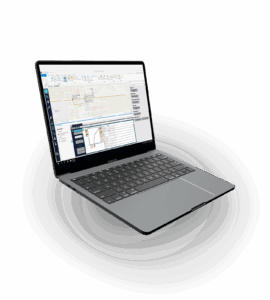

Consolidation of both fiber and coax infrastructure in a single powerful geographic environment—from the trench in the street to the fiber in the building.


The tool offers advanced features to visualize physical details, such as cross-sections of drillings (including depths and profiles) and schematic ‘butterfly views’ of splice connections.

Through web-based access with MarlinDT Web, field technicians have immediate access to the same rich physical data (such as splice plans and cabinet views) as the engineers in the office.

“A key objective for the transformation was to minimize the actions required from our design teams. By working with templates and semi-automated workflows, we’ve achieved a significant increase in efficiency.”

Result
With the implementation of MarlinDT, Telenet now has a future-proof and high-performance PNI system:

Central source of truth
All physical assets—from outside plant (cables, trenches) to inside plant (patch panels, splices)—are managed in a single, accessible data model.

Uniform working method
Uniform working method
Uniform working method
The design process has been accelerated by using smart templates that eliminate repetitive drafting work.
Better field support
Technicians have immediate insight on their tablets into the exact physical situation (e.g., “which fiber is in which cassette?”), reducing errors during interventions.